Four operating companies, five countries, two principal brands — and one co-branded template system holding them together.
Four operating companies, five countries and two principal brands, held together by one co-branded template system I co-developed and rolled out across every market.
Tamgo Group sells generator sets, power, water and solar solutions through four operating
companies. Each one carries a principal brand with its own guidelines, and each one talks to a
different market. The work had to make the group recognisable across five countries without
erasing the local company a customer actually buys from.
Client
Tamgo Group — FG Wilson (Engineering) FZE, Dubai · Laurus Technologies, Doha · Tamgo Tanzania · Blackwood Hodge, Kenya and Uganda
Sector
Industrial B2B distribution — power, water and solar solutions
Markets
UAE · Qatar · Tanzania · Kenya · Uganda
Period
2024 – present
My role
Account Manager
What I owned
The briefs, key messages and scripts; the calendar across all four companies; the client relationship through the group’s Dubai hub
Team context
The co-branded template system was co-developed with the agency’s creative lead. Design and production ran through the studio team; I owned direction, copy and coordination
Languages
English
Channels
Instagram feed systems for three operating companies · distributor-facing B2B content · product value-proposition video
Reporting
— No performance data for this account is mine to publish
Brief
A multi-country distribution group representing global manufacturers, FG Wilson among them, needed its local operating companies to look like one group without looking like one company. The group coordinates from Dubai; the customer buys from Doha, or Dar es Salaam, or Kampala.
Decision
Put the brand governance in a system rather than in a review meeting. A template that pairs each local company with its principal brand can be handed to four teams in five countries and still hold, which a set of guidelines circulated by email cannot.
What shipped
A co-branded template system, co-developed and rolled out across all five markets, pairing each operating company with its principal brand.
Local variation kept deliberate: each company holds its own colour and its own product mix inside the shared grid, so a Doha buyer sees a Doha supplier and the group still sees one brand.
Technical product information — generator sets, power, water, solar — translated into channel-ready content a distributor audience can actually use, including product value-proposition video.
Briefs, key messages and scripts written so design and production could execute without rework, on one calendar and one documented approval cycle.
Scope
Four operating companies, five countries, two principal brands, one template system, three co-branded feed systems running — @fgwilson.engineering, @laurustechnologiesllc and @tamgotanzania — plus product video. This is channel and partner marketing: co-branded asset systems, principal brand guidelines, distributor-facing content, multi-market brand governance. No performance data for this account is mine to publish.
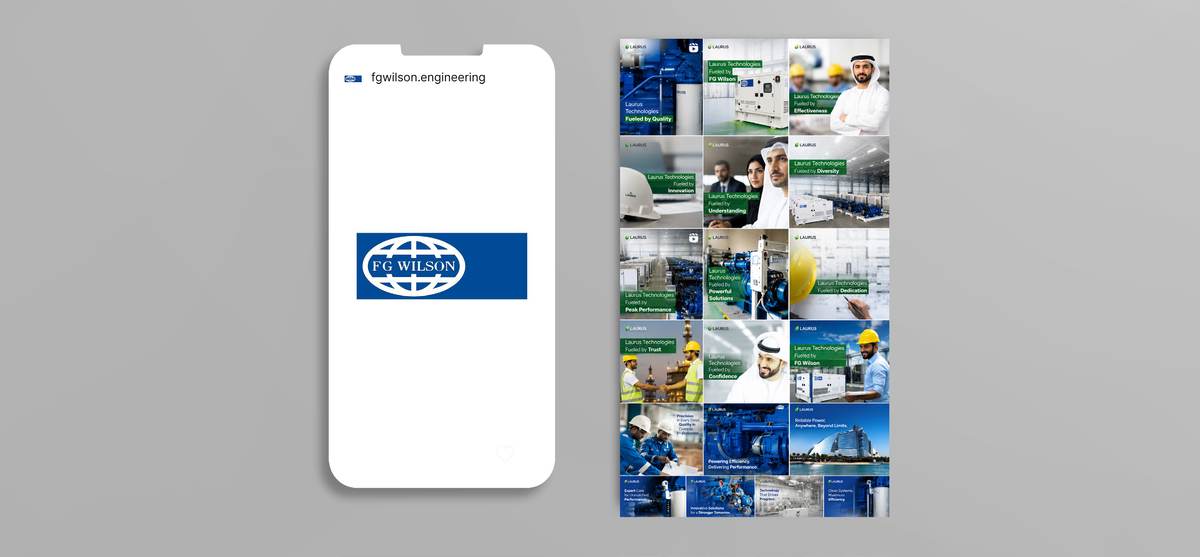
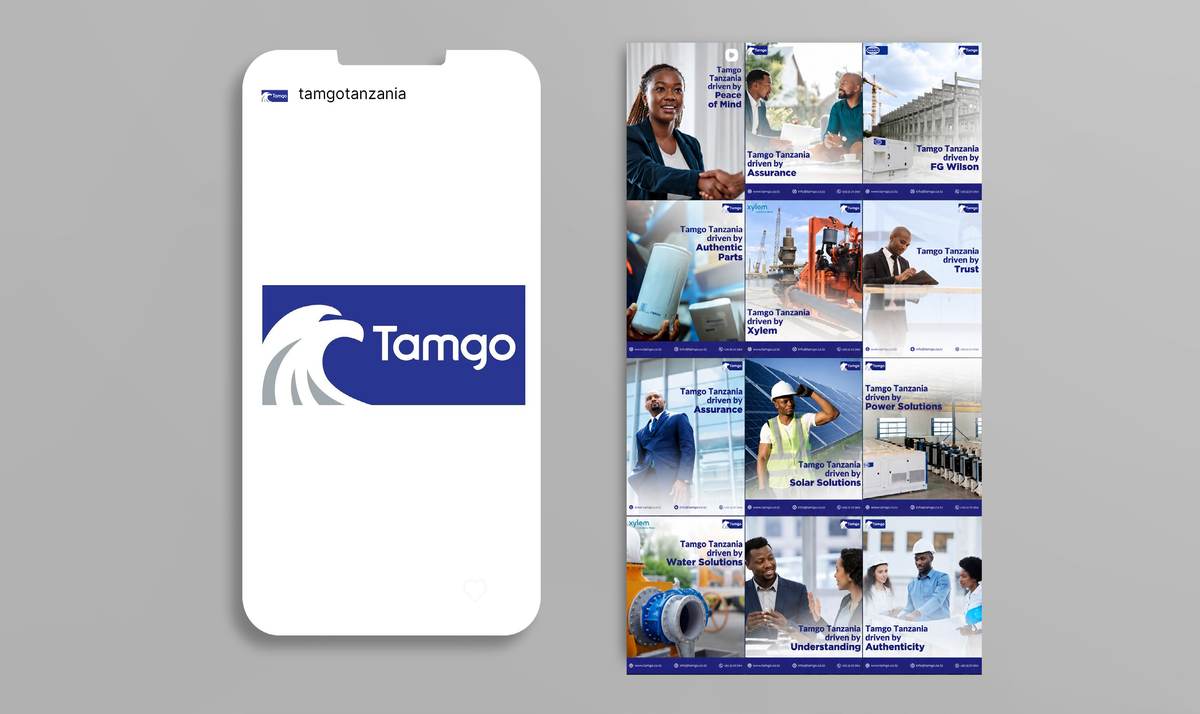
Three companies, three markets, one structure. Read the grids left to right: the layout never
changes, only the brand that leads it.
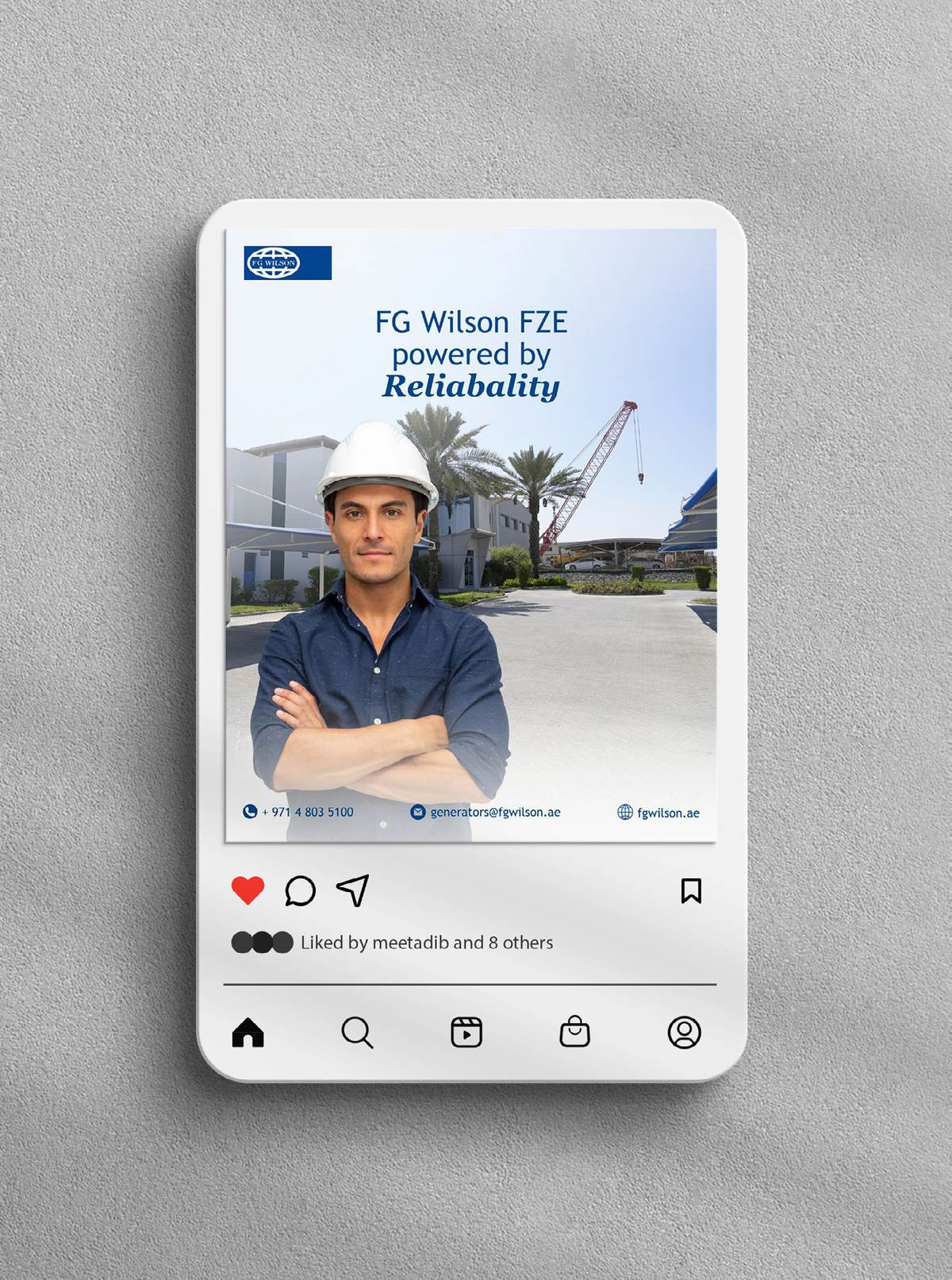
The Dubai company sells on FG Wilson’s reliability rather than its own name, so the principal brand’s blue owns the whole grid and the local entity signs it. That is the decision the template makes explicit — who leads, and who endorses.
Same template, Laurus green. Doha customers buy from a local supplier, so the colour and the name stay local while the layout stays group-standard. The variation is in the skin, never in the structure.
Tanzania carries the widest range — authentic parts, water solutions, power solutions, solar — so this grid was the stress test. The template had to hold five different subjects without reading as five different brands.
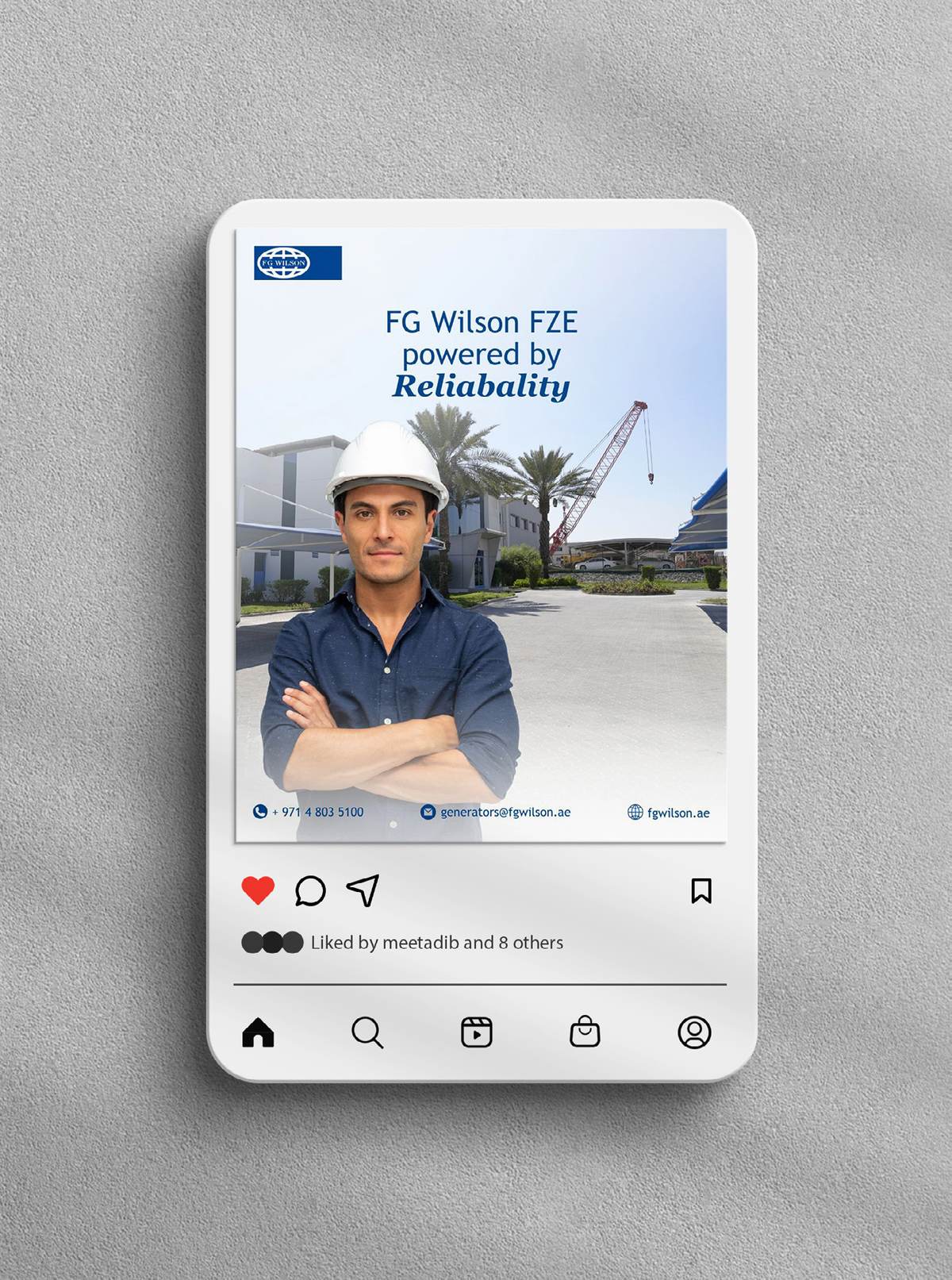
One fixed slot in the template takes a single word — here, Reliability. The word changes by market and by product; the structure never does, which is what lets four companies publish independently and still look like one group.
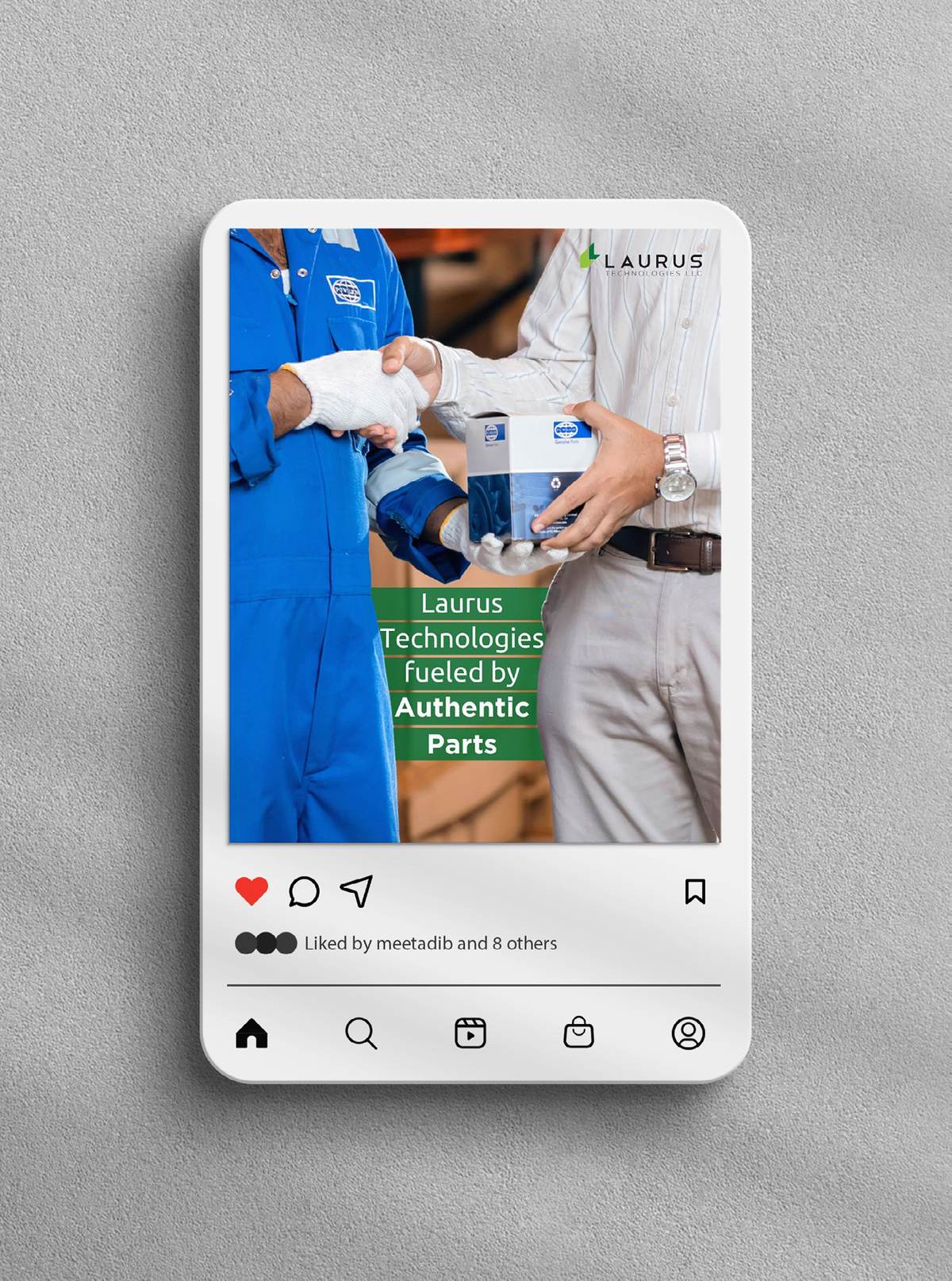
Counterfeit parts are the live buying anxiety in this category, so authentic parts gets its own recurring post rather than a bullet inside a spec sheet. The message earns a slot because it answers the objection the distributor hears most.
A third post in the same frame is the proof that this is a system and not a layout someone drew twice. The next product drops into it without a designer starting over, which is the only way five markets stay consistent.
Video, briefed the same way: open on the customer’s problem, and let the specification arrive
after the reason to care.
Opening on the customer’s downtime instead of the generator’s specification. Nobody buys kVA — they buy the shift that does not stop.
A value-proposition video built as a sales answer, not an ad. “Why FG Wilson?” is the question the channel gets asked, so the channel needed something it could forward.
The service engineer on camera, because in this category the after-sale is the purchase. Parts and servicing are what the distributor is really selling.